There are no items in your cart
Add More
Add More
| Item Details | Price | ||
|---|---|---|---|
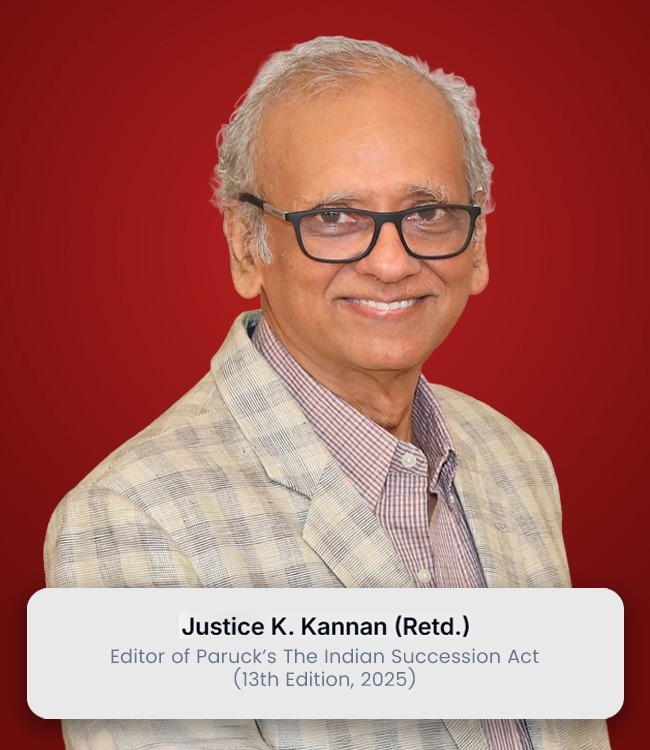
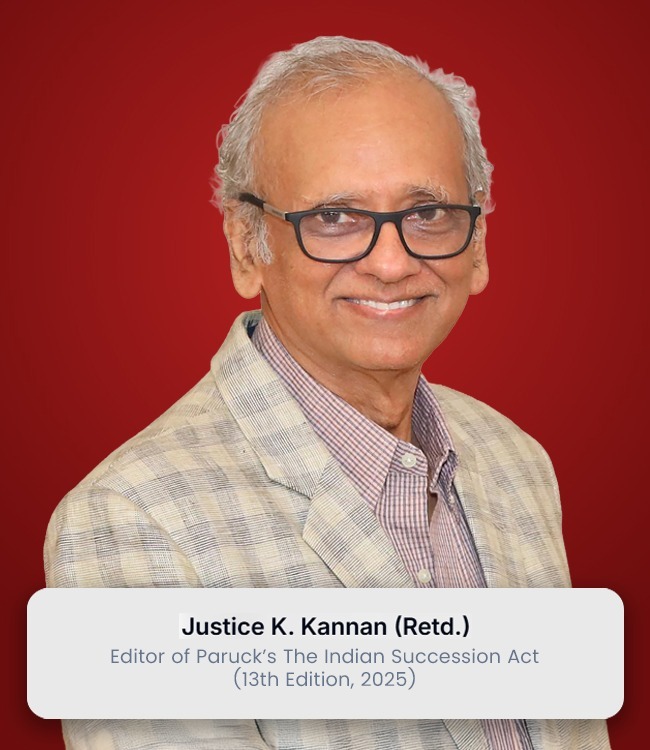
A structured course by Justice K. Kannan (Retd.)
📅 23 Mar 2026 – 22 Jun 2026 • Bi-weekly classes (Monday & Tuesday)
🕖 7:15 PM – 8:45 PM IST • Live Online Classes
Enroll Now - ₹5,999 (incl. Taxes) Download Brochure27 Live Sessions
40 Total Hours
Certification Upon Completion
Inheritance law sits at the intersection of family, property, personal law, and constitutional values. This course explores how wealth and property move across generations under Hindu, Muslim, and secular legal systems in India. From the Hindu Succession Act and Muslim inheritance principles to trusts, estate planning, and digital asset succession, this course provides a deep understanding of inheritance law in both doctrine and practice.
Comprehensive training on the four New Labour Codes with doctrinal clarity and practical insight.
Course Dates
23 March 2026 – 22 June 2026
Bi-weekly classes (Monday & Tuesday)
3 Weeks · 27 Sessions
Duration & Format
1 hr 30 minutes per session
Lecture + 20 min Q&A
40 total hours
Delivery Mode
Live Online Classes
Real-time Q&A sessions
Interactive virtual classroom
Recordings uploaded within 24 hours, 6 months access
Who should attend
Family Court Practitioners
Mediators
Lawyers
Civil Court Judges
Law Students
Judiciary Aspirants
General Public
Understand core concepts of inheritance and succession law.
Define intestate and testamentary succession.
Compare inheritance frameworks under Hindu law, Muslim law and the Indian Succession Act.
Identify categories of heirs and rules governing coparcenary property.
Draft basic testamentary instruments including wills and codicils.
Understand probate, succession certificates and letters of administration.
Critically examine gender bias and structural inequality in inheritance law.
Evaluate constitutional questions involving Articles 14, 15 and 44.
Assess debates on Uniform Civil Code and inheritance taxation.
What is the difference between succession, gift and nomination?
How does inheritance differ under Hindu, Muslim and secular law?
What are the rights of daughters, illegitimate children and transgender persons in inheritance?
How are wills created, proved, revoked or altered?
What are the limits of testamentary freedom under Muslim law?
How do probate and letters of administration work?
Can trusts be used for estate planning and wealth transfer?
How will digital assets and cross-border estates affect inheritance?
Distinguished former judge, legal scholar and expert mediator.
Former Judge, Madras High Court (2008),Judge, Punjab & Haryana High Court (2008-2016)
Former Chairperson
National Railway Claims Tribunal, New Delhi
Founder of Madhyasatham, an initiative promoting mediation and dispute resolution.
Author and editor of several leading works on specialised areas of law including - (i) Law and Medicine: Exploring Areas of Intersection (2nd Ed., 2025), (ii) Modi’s Textbook of Medical Jurisprudence and Toxicology (28th Ed., 2025), (iii) Paruck’s Indian Succession Act
Justice Kannan brings decades of judicial experience and academic insight to explain inheritance law through case law, statutory interpretation, and contemporary debates
27 structured sessions covering doctrinal foundations and modern debates in inheritance law.
Understand how law governs the transfer of property across generations and engage with the major debates shaping inheritance law in India.
27 structured sessions
`40 hours of focused legal learning
Certificate upon completion
6 Months Recording Access
Includes 18% GST & gateway fees • Limited seats available
Questions? Contact us at academy@livelaw.in or +91 7994869912